🌞 Solar & Space Weather
Ηλιακή δραστηριότητα, γεωμαγνητικό πεδίο και διαστημικός καιρός σε πραγματικό χρόνο.
Πηγές: NOAA / SWPC και δορυφόροι GOES.
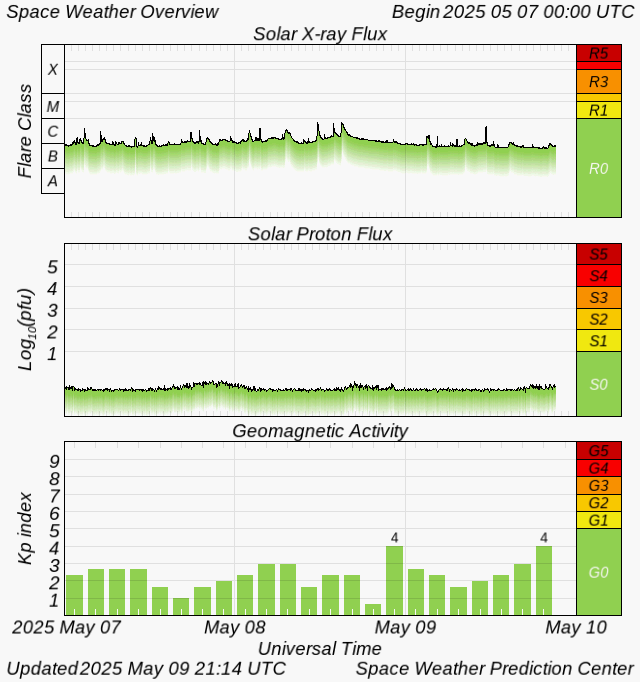
Geomagnetic (Kp) 🧲
ⓘ
Quiet
2.7
1-minute estimated Kp
G-scale: G0
G-scale: G0
IMF Bz ↕️
ⓘ
Northward
0.8 nT
Last update: 2026-10-12T07:35:00 UTC
Bz: όσο πιο αρνητικό & επίμονο, τόσο πιο “γεωενεργό”.
Bz: the more negative & persistent, the more geoeffective.
Συνολική Κατάσταση
Overall Status
ⓘ
Ήρεμος Ήλιος
Quiet Sun
🌞
Χαμηλή γεωμαγνητική δραστηριότητα.
Low geomagnetic activity.
Τρέχουσα κλίμακα: G0 (από Kp)
Current scale: G0 (from Kp)
GOES X-ray Flux (last 6h)
Ώρα Ελλάδας (EET/EEST)
Kp (recent)
NOAA SWPC
IMF Bz (last 2h)
Ώρα Ελλάδας (EET/EEST)
Solar wind speed (last 24h)
Ώρα Ελλάδας (EET/EEST)
3-Ημερη Τάση Διαστημικού Καιρού
3-Day Space Weather Trend
Έκδοση:
Issued:
2026 Oct 12 0030 UTC
Γεωμαγνητικό (G)
Geomagnetic (G)
Μέγιστο Kp
Kp max
G0
4.00
G0
4.00
G1
5.00
Ηλιακή Ακτινοβολία (S)
Solar Radiation (S)
Πιθανότητα S1+
S1+ probability
S1+
10%
S1+
5%
S1+
5%
Ραδιοδιακοπές (R)
Radio Blackout (R)
R1–R2 / R3+
R1–R2
65%
·
R3+
15%
R1–R2
55%
·
R3+
10%
R1–R2
45%
·
R3+
5%
Αιτιολόγηση Rationale
G: G1 (Minor) storms are expected on 14 Oct, due to the influence of a geoeffective negative polarity coronal hole high speed stream.
S: There is a slight chance for S1 (Minor) or greater solar radiation storms on 12 Oct, primarily due to the flaring potential of Region 4549.
R: R1-R2 (Minor-Moderate) radio blackouts are likely, with a slight chance for R3 (Strong) events, through 13 Oct. This decays to a chance for R1-R2 (Minor-Moderate) radio blackouts on 14 Oct.
Πώς να το διαβάσεις 📌
How to read this 📌
ⓘ
Kp 🧲
- 0–2: ΉρεμοςQuiet
- 3–4: ΕνεργόςActive
- 5: Μικρή καταιγίδαMinor storm
- 6–7: ΙσχυρήStrong
- 8–9: ΑκραίαExtreme
Στην Ελλάδα, σέλας είναι εξαιρετικά σπάνιο· πρακτικά χρειάζεται Kp ≥ 8.
In Greece, aurora is extremely rare; practically it requires Kp ≥ 8.
IMF Bz ↕️
- > 0 nT: Northward (λιγότερο ευνοϊκό)Northward (less favorable)
- 0 έως -5 nT: Southward (αυξάνει πιθανότητα)Southward (increases chance)
- ≤ -5 nT: Geoeffective (πολύ ευνοϊκό)Geoeffective (very favorable)
Όσο πιο αρνητικό και όσο κρατάει, τόσο “ανοίγει την πόρτα” για καταιγίδα.
The more negative and the longer it persists, the more it enables storms.
GOES X-ray 🔥
- C: Ασθενής έκλαμψηWeak flare
- M: Μέτρια (πιθανές ραδιο-επιπτώσεις)Moderate (possible radio impacts)
- X: Ισχυρή (μπορεί να οδηγήσει σε επιπτώσεις)Strong (can lead to impacts)
Solar wind speed 💨
- < 400 km/s: ΚανονικόςNormal
- 400–600 km/s: ΑυξημένοςElevated
- > 600 km/s: ΈντονοςStrong
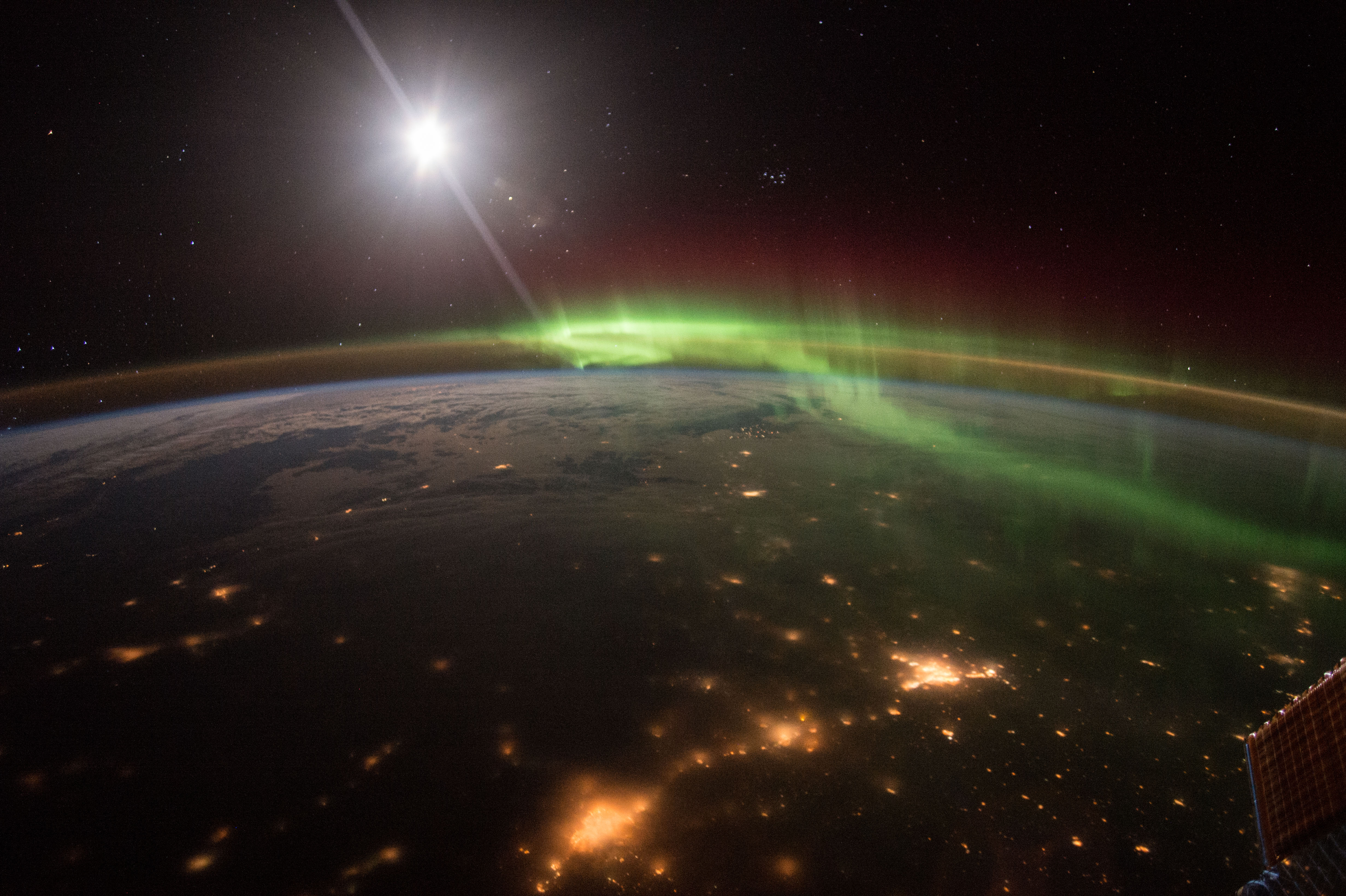
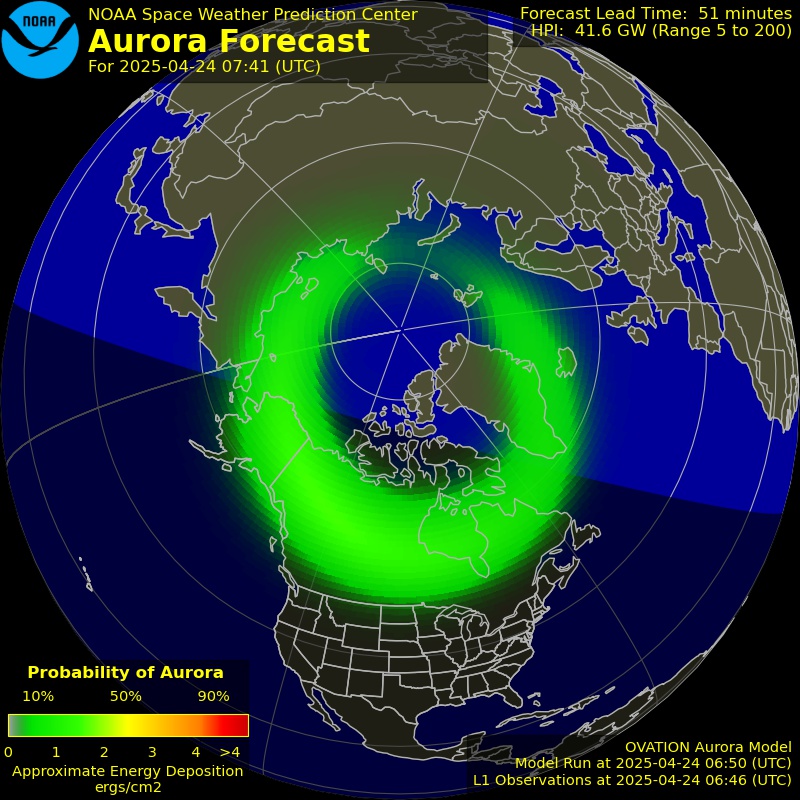
Βόρειο Σέλας ✨🌌
Aurora ✨🌌
ⓘ
Εκπαιδευτικό section (όχι πρόγνωση για Ελλάδα)
Educational section (not a Greece forecast)
Το σέλας εμφανίζεται όταν φορτισμένα σωματίδια του Ήλιου αλληλεπιδρούν με την ατμόσφαιρα της Γης. Στην Ελλάδα είναι εξαιρετικά σπάνιο και απαιτεί πολύ ισχυρές γεωμαγνητικές καταιγίδες (συνήθως Kp ≥ 8).
Aurora happens when charged solar particles interact with Earth’s atmosphere. In Greece it is extremely rare and typically requires very strong geomagnetic storms (usually Kp ≥ 8).
Συμβουλή: Αν ποτέ υπάρχει πιθανότητα, καλύτερες περιοχές είναι η Βόρεια Ευρώπη.
Tip: If there’s a chance, Northern Europe is far more realistic.